
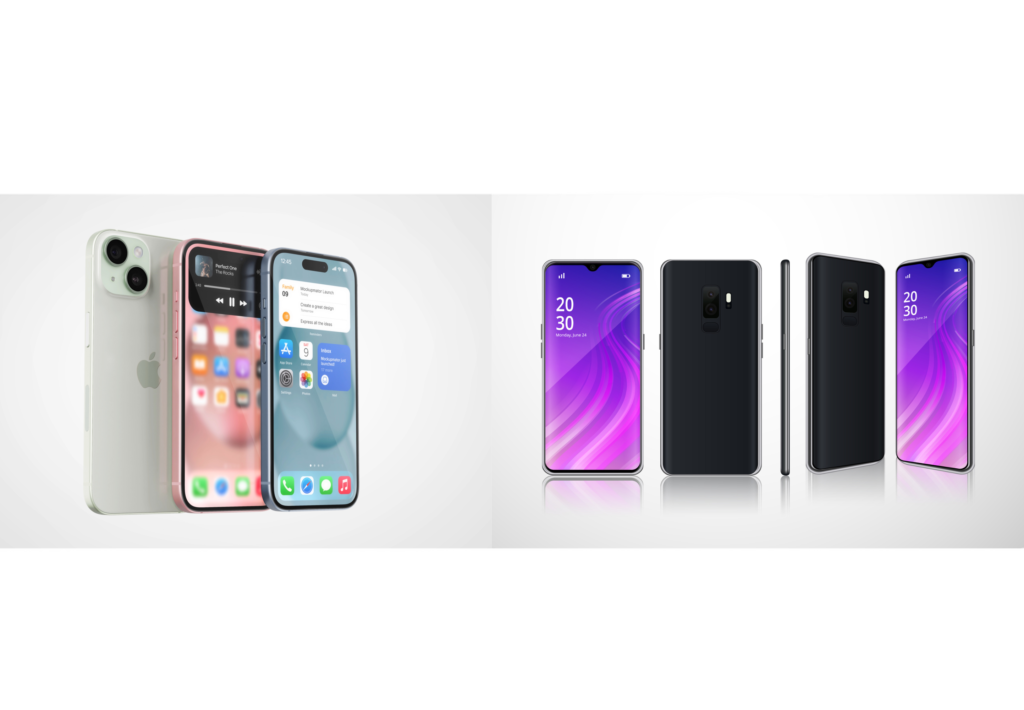
In 2026, the gap between iPhone and Android has narrowed in terms of raw power, but the two ecosystems have doubled down on their distinct philosophies. Apple is leaning into a “cleaner,” more immersive hardware aesthetic, while Android manufacturers are pushing the boundaries of battery tech and AI-first hardware.
Here is the breakdown of the landscape as of early 2026:
1. The Hardware Face-Off
The biggest shift this year is the move toward “invisible” technology and extreme battery density.
| Feature | iPhone (iPhone 17 & 18 Pro) | Android Flagships (S26 Ultra / Pixel 10) |
| Display | Moving toward Under-Display Face ID (iPhone 18 Pro) to shrink the Dynamic Island. | Bezel-less “Waterfall” or quad-curved displays; high-frequency PWM dimming for eye comfort. |
| Battery | Focus on efficiency; standard 1-2 day life with MagSafe refinement. | Introduction of Silicon-Carbon batteries (6,000mAh+ in slim bodies) and 100W+ charging. |
| Biometrics | Face ID remains king; rumors of a return to Touch ID for the iPhone Fold. | Ultrasonic under-screen sensors that work over larger areas of the display. |
| Foldables | iPhone Fold (Late 2026) – rumored book-style design with a “creaseless” hinge. | Tri-fold devices (Samsung/Huawei) that turn a phone into a full 10-inch tablet. |
2. Software & AI: The “Personal Assistant” Era
In 2026, OS updates are no longer about UI tweaks—they are about which AI “agent” can actually run your life.
- iOS 19/20: Apple has integrated a “Siri 2.0” (powered by an in-house A20 Neural Engine) that focuses on Privacy-First AI. Most tasks happen on-device, ensuring your data never leaves the phone. The ecosystem remains its “walled garden” strength, with iMessage and AirDrop still being the primary social anchors in the US.
- Android 16/17: Google’s Gemini is now the core of the OS. The Pixel 10/11 series features “Speak-to-Tweak” (voice-based photo/video editing) and proactive AI that predicts your next app move. Android also leads in Customization, with 2026’s “Material You” allowing for even deeper OS-level theme control.
3. Camera Performance
- iPhone: Remains the gold standard for Video. The 2026 Pro models feature Variable Aperture lenses, allowing for natural “DSLR-style” bokeh in video and better low-light performance.
- Android: Dominates in Zoom and Raw Specs. Samsung’s S26 Ultra continues to push the 200MP+ boundary with improved AI-assisted 100x zoom that looks sharper than previous years. Sony and Xiaomi are the picks for “pro” photographers who want massive 1-inch sensors.
4. The Longevity Factor
- Apple: Still the leader in Resale Value. An iPhone bought in 2026 is expected to receive updates until at least 2032.
- Android: Major brands like Samsung and Google have officially matched Apple, promising 7 years of OS updates for their flagships. However, mid-range and budget Androids still vary wildly in support.
Which should you choose?
Go with iPhone if… you want the most stable video camera, the highest resale value, and a device that integrates perfectly with your Mac or Apple Watch.
Go with Android if… you want the latest “bleeding edge” tech (like tri-folds or 15-minute fast charging), prefer a specific hardware look (like the Pixel’s visor), or need deep file-system flexibility.